Las Palmas for developers: why we built a tech company on a volcanic island
Cost of living, tech scene, coworking, and daily life in Las Palmas de Gran Canaria — written by a European software house that actually relocated there.

Lasting Dynamics team
Editorial team at Lasting Dynamics

Las Palmas for developers: why we built a tech company on a volcanic island
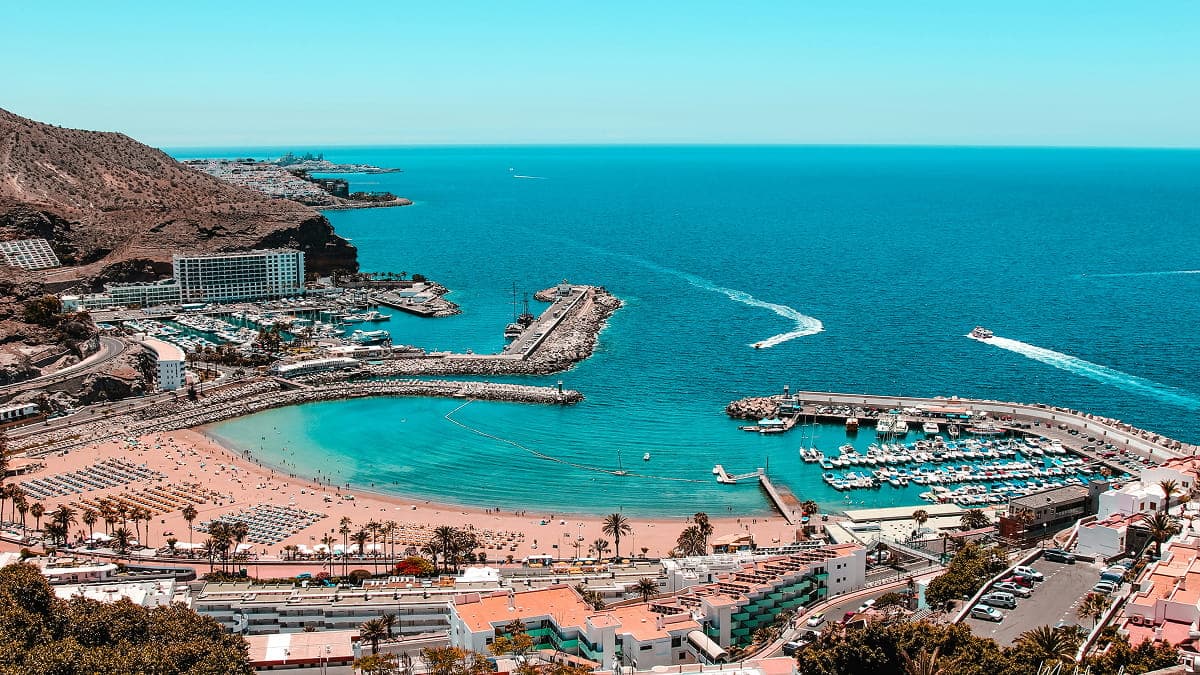
There's a moment that happens to almost everyone who moves to Las Palmas from a northern European city. It usually comes about three weeks in, on a Tuesday morning. You're sitting at your desk — or maybe at a café table on a side street in Triana — and you realize you haven't checked your phone in two hours. Not because you've been unusually disciplined. Because nothing felt urgent enough to interrupt what you were doing. The Atlantic is somewhere to your left. The temperature is 22°C. It's January.
We're Lasting Dynamics, a software house headquartered in Las Palmas de Gran Canaria. We didn't end up here by accident or by following a trend. We made a deliberate choice, and we've spent the last few years watching that choice play out in the lives of the developers who joined us. This isn't a nomad lifestyle post. It's an honest account of what it actually means to build a tech career — and a tech company — on an Atlantic island that most of Europe has barely heard of.
Why Las Palmas, and why now
The European tech relocation conversation has been dominated by the same three cities for the better part of a decade: Lisbon, Barcelona, Berlin. Each has its logic. Berlin has the density and the counterculture. Barcelona has the weather and the design scene. Lisbon had the price — until it didn't anymore.
Las Palmas sits outside this conversation almost entirely, which is precisely why it's interesting. The city of 380,000 people on the northern tip of Gran Canaria has been a retirement destination for German pensioners and a winter sun escape for British tourists. It has not been, until very recently, on the radar of European developers looking for a place to build their careers. That's changing — and the reasons why tell you something important about where the European tech landscape is heading.
The remote work shift didn't just make geography optional. It made the cost of geography visible in a way it hadn't been before. When you're commuting to an office in Amsterdam or London, the premium you pay to live close to that office feels like an unavoidable cost of doing business. When you're working remotely, that premium becomes a choice — and a lot of developers are realising they've been making an expensive choice without thinking about it. Las Palmas is what happens when you stop making that choice automatically.
The city has also benefited from a specific structural advantage: it's the warmest major European city in winter, by a significant margin. Average January temperatures of 19-20°C, with lows rarely dropping below 15°C. For a developer who grew up in Stockholm or Hamburg or Warsaw and has spent a decade commuting through grey winters, this is not a minor quality-of-life upgrade. It's a fundamental change in how the year feels.
The numbers: what living here actually costs
The cost of living question is the one everyone asks first, and it's the one where Las Palmas has the most compelling answer. These are real numbers, not estimates from a cost-of-living index built from tourist prices.
A one-bedroom apartment in a good central neighbourhood — Ciudad Jardín, Triana, Guanarteme — runs between €700 and €950 per month. A two-bedroom, which for a developer who needs a proper home office is often the more relevant benchmark, sits between €900 and €1,300. Las Canteras beach area commands a premium: expect €1,100-€1,500 for a two-bedroom with sea views. These prices are for unfurnished apartments on long-term leases — the furnished short-term market runs higher, but it's also more available than in most European cities.
Groceries are meaningfully cheaper than in northern Europe. A weekly shop for one person runs €50-€70 at a standard supermarket. Eating out is where the gap becomes most noticeable: a lunch menu at a local restaurant — three courses, water, coffee — costs €10-€12. Dinner at a decent restaurant without trying to be cheap: €25-€35 per person including wine. The fish is exceptional and not expensive. The local wine from Lanzarote and Tenerife is underrated and cheap.
Utilities — electricity, water, internet — add €80-€120 to monthly costs. Public transport is functional but not the main way most residents get around; a monthly bus pass costs €35. Healthcare through the public system is free for EU residents with residency registered; private health insurance for comprehensive coverage runs €50-€80 per month and is worth having for the reduced waiting times.
The honest summary: a developer earning a European software house salary — €40,000-€65,000 gross, depending on experience — lives very comfortably in Las Palmas. The same salary in Amsterdam, London, or Zurich would produce a materially worse quality of life. This isn't a marginal difference. It's the difference between renting a flat with a proper office and sharing a flat with three people.
Tech infrastructure: the question that actually matters
The lifestyle case for Las Palmas is easy to make. The infrastructure case requires more specificity, because it's where the legitimate concerns live.
Fibre internet is widely available in the city. Most modern apartment buildings have FTTH connections with speeds of 300Mbps-1Gbps. The main providers — Movistar, Orange, Vodafone — all operate in Las Palmas, and installation typically takes 1-2 weeks. We've never had a developer join us who couldn't get reliable, fast internet in their apartment within two weeks of arriving. This is the baseline question for remote work, and Las Palmas passes it without difficulty.
Latency to European servers is slightly higher than from a continental European city — typically 20-40ms to Madrid, 40-60ms to London or Amsterdam — but this is imperceptible for standard development work and video calls. If your work involves latency-sensitive real-time systems, it's worth testing. For the overwhelming majority of development work, it's irrelevant.
The coworking scene has grown significantly in the last three years. Coworking Las Canteras, Yucca Hub, and several smaller spaces offer day passes and monthly memberships. Prices run €100-€200 per month for a fixed desk, considerably less than equivalent spaces in Barcelona or Lisbon. The community in these spaces skews international — a mix of remote workers from across Europe, local entrepreneurs, and an increasing number of developers employed by European companies.
The airport connects Las Palmas directly to Madrid, Barcelona, Rome, Milan, Amsterdam, and London, with flight times of 2-4 hours. Ryanair, Vueling, and Iberia all operate routes. For developers who need to travel to clients or company offices occasionally, this is workable. For developers who need to be in a European capital multiple times per month, it becomes a genuine constraint.
Las Palmas vs Lisbon vs Barcelona vs Berlin: the honest comparison
Every developer considering Las Palmas is also considering at least one of these three cities. Here's the comparison as we actually see it, without the promotional gloss.
Lisbon was the obvious European tech relocation destination for most of the 2010s, and it earned that reputation. The startup scene is real, the expat community is large and established, and the quality of life is high. The problem is that Lisbon's success has priced out a significant part of what made it attractive. A one-bedroom in Príncipe Real or Chiado now costs €1,400-€1,800. The nomad and expat influx has created a city that sometimes feels more like an international bubble than a place with its own identity. Las Palmas is 5-7 years behind Lisbon on this curve — which means it still has what Lisbon had in 2016.
Barcelona offers more in terms of cultural density, nightlife, and the feeling of being in a major European city. The tech scene is larger and more established. The tradeoffs: cost of living is significantly higher (€1,200-€1,800 for a one-bedroom in a decent neighbourhood), the city is genuinely crowded, and the political situation around Catalan independence creates occasional uncertainty for businesses. For developers who prioritise urban density and cultural life, Barcelona wins. For those who prioritise quality of life and cost efficiency, Las Palmas wins.
Berlin is the most different comparison. The city has Europe's most interesting tech and startup ecosystem outside London, a genuinely unique cultural identity, and a cost of living that — while no longer as cheap as it was — remains lower than Paris or Amsterdam. The obvious problem: the weather. If you're a developer who thrives in grey, cold winters and finds the energy of a large northern European city stimulating, Berlin is an excellent choice. If you've spent enough winters in that climate and are ready for something different, Las Palmas is the answer.
The honest summary: Las Palmas wins on cost of living and climate, loses on urban density and cultural infrastructure. It's the right choice for a specific type of developer — one who values quality of daily life, outdoor activity, and cost efficiency over the energy of a major European capital. That's a real trade-off, not a deficiency.
The neighbourhoods: where to actually live
Las Palmas stretches along roughly 20 kilometres of Atlantic coastline, and the city's different neighbourhoods have genuinely different characters. The choice of where to live shapes the experience of the city considerably.
Vegueta and Triana form the historic centre. Vegueta is the colonial quarter — wooden balconies painted deep green, a cathedral that looks slightly out of place in the warm light, a covered market with stalls that have been in the same families for generations. Triana is the commercial heart of the old city, with independent shops, bookstores, and café terraces on wide pedestrian streets. Living here puts you in the middle of everything — the weekend noise and the beautiful, occasionally poorly-maintained apartments included.
Ciudad Jardín is where much of our team has ended up, and for good reason. It's ten minutes' walk from Triana, tree-lined, built in the 1930s and 1940s with apartment buildings that have high ceilings and good natural light. It's quiet without being suburban. Prices are mid-range. The quality of apartments is consistently good. If you're arriving in Las Palmas for the first time and don't know where to start, Ciudad Jardín is the answer.
Las Canteras is the beach neighbourhood. Three kilometres of golden sand protected by a natural lava reef that keeps the water calm year-round — one of the best urban beaches in Europe, by any reasonable measure. Living two minutes from that beach changes your daily life in ways that are hard to quantify but easy to feel. Prices here are the highest in the city, but the premium buys something real.
Schamann and Guanarteme are more local neighbourhoods, less populated by expats and nomads, with lower prices and a more authentic character. Good choices for developers who want to integrate into the city rather than orbit in an international bubble. The restaurants are better and cheaper, the pace is slower, and the neighbours are more likely to be Canarian families than other remote workers.
Daily life: the things you can't google
There are aspects of Las Palmas that only become clear once you live there, and that no amount of research from a distance will reveal.
The rhythm of the city is Mediterranean, and then some. Shops open at 9 and close between 1 and 4pm, then reopen until 8. Restaurants don't serve dinner before 8:30pm, and the places frequented by locals don't really come alive until 9 or 9:30. If you come from Amsterdam or London, where everything runs on compressed efficiency, it takes a few weeks to recalibrate your internal clock. After those few weeks, most people find they don't want to recalibrate back.
The climate earns its reputation. Average temperatures range from 18°C in winter to 26°C in summer, with very little rain and very few days of oppressive heat. The trade winds keep the air moving. The light is extraordinary — the kind of light that makes everything look slightly more saturated than it should. Running along the seafront at 7am in February with the sun rising over the Atlantic is the kind of experience that sounds like a cliché until you do it, and then it becomes the thing you mention when people ask why you moved here.
The social scene for international developers is smaller than Lisbon's but more coherent. There are regular tech meetups, a growing community of European remote workers, and enough density of English speakers that arriving without Spanish doesn't make you socially isolated. Learning Spanish — specifically Canarian Spanish, which has its own cadences and vocabulary — makes the experience significantly richer, and most of our team picks up functional Spanish within the first year.
The food deserves more attention than it gets. Canarian cuisine is its own thing: papas arrugadas with mojo rojo and mojo verde, fresh tuna and swordfish grilled simply, gofio in various forms, goat cheese from the interior of the island. The mercado in Vegueta is one of the best food markets in Spain. The restaurant scene has improved markedly in the last five years, with a new generation of chefs doing interesting things with local ingredients. You will not miss Barcelona's food scene as much as you expect.
Bureaucracy: the honest account
Moving to Las Palmas as an EU citizen is straightforward. As a non-EU European (UK, Norway, Switzerland), it requires more paperwork but is entirely manageable with the right support.
The key steps for EU citizens: obtain a NIE (Número de Identificación de Extranjero) — the tax identification number required for everything from opening a bank account to signing a lease. Register on the Padrón municipal — the local census register, which is required for accessing public services and is the basis for residency status. Open a Spanish bank account. These three steps, done in the right order, take 2-4 weeks and unlock everything else.
For non-EU Europeans, the process involves a visa application and a more formal residency permit. Spain's digital nomad visa, introduced in 2023, provides a route for remote workers. For developers employed by Lasting Dynamics, we handle the bureaucratic process directly — it's part of what we mean when we say we support relocation.
The Spanish public healthcare system is excellent and free for registered residents. The bureaucratic culture is slower than northern European norms, and things that should take a week sometimes take three. Building in buffer time and patience is the main adaptation required. After the initial setup period, day-to-day life in Las Palmas involves very little bureaucracy.
Relocating with company support
Moving to a new country is easier when you have a structure around you. At Lasting Dynamics, relocation support isn't an afterthought — it's part of how we hire. We help new team members find apartments before they arrive, navigate the NIE and Padrón process, connect with the local developer community, and settle into the city in a way that doesn't involve six weeks of administrative confusion.
The developers who've joined us from Germany, Italy, the Netherlands, and the UK have all gone through this process. The consistent feedback: the first month is the most disorienting, the second month starts to feel normal, and by the third month most people are wondering why they didn't move sooner.
If you're considering a move and want to talk to someone who actually lives and works here, reach out — we're happy to answer questions honestly, including the ones where the honest answer isn't entirely positive.
What nobody tells you before you move
A few things that don't appear in the nomad guides or the relocation listicles.
The island is small. Gran Canaria is 1,560 square kilometres. You can drive from Las Palmas to the southern resort towns in 45 minutes. The interior of the island — dramatic volcanic landscape, pine forests, villages that feel unchanged since the 1970s — is accessible in 30 minutes. The smallness is mostly an asset: everything is close, traffic is manageable, and the natural environment is always nearby. Occasionally it creates a slight sense of limitation that you don't feel in a continental city. Most people find this is a reasonable trade-off within about three months.
The wind is constant. The trade winds that keep the climate mild also mean that Las Canteras beach has days when the surf is too rough for swimming, and that certain parts of the city are noticeably windier than others. This is not a complaint — it's a feature that keeps the summers bearable. But it's worth knowing before you imagine a perfectly calm Mediterranean beach experience.
The city has a working-class Canarian character that coexists with the expat and nomad layer in ways that are sometimes harmonious and sometimes not. Gentrification is happening, particularly in Vegueta and Las Canteras. The tension this creates is not unique to Las Palmas — it's the same tension playing out in Lisbon and Barcelona — but it's worth being aware of as a newcomer.
None of these are reasons not to come. They're reasons to come with accurate expectations rather than inflated ones. Las Palmas is an excellent place to build a career and a life. It's not a perfect place, because no place is. The developers on our team who are happiest here are the ones who arrived knowing what they were choosing — not the ones who arrived expecting Lisbon 2015.
If you're considering relocating to Las Palmas to work with us, the open positions page is the right place to start. If you're considering a move and want to talk to someone who actually lives and works here, reach out — we're happy to answer questions.

Lasting Dynamics team
Editorial team at Lasting Dynamics
The Lasting Dynamics team writes from Las Palmas de Gran Canaria, where the company is headquartered.